


Small steps towards an ultimate goal
13 years ago


A pregnant woman, like any other competent adult, has certain basic rights. She has the right (for any or no reason) to decline medical treatment. This has long been recognized by the common law in the United States, Canada, England and Australia. (from Childbirth and the law; By John A. Seymour)
An abortion is the termination of a pregnancy by the removal or expulsion from the uterus of a fetus/embryo, resulting in or caused by its death. (from Wikipedia)
Results were the same in all four studies: more electronically monitored women ended up...with Cesarean deliveries. Cesarean section rates ranged between 63% and 314% higher for electronically monitored women than manually monitored women. There was no improvement in perinatal outcome for the babies delivered by Cesarean section. The principal "reasons" alleged for these surgical deliveries--fetal distress and cephalopelvic disproportion (disproportion of head to pelvis)--cannot be proved or disproved. The real reasons, according to these studies, are attending physicians' impatience and nervousness. (Brackbill et al. 1984:10)

Risks to the baby from elective cesarean section:
* Babies delivered by elective cesarean have an increased risk of neonatal respiratory distress syndrome (RDS), a life-threatening condition,3-7 and other respiratory problems that may require NICU care.
* Babies delivered by elective cesarean have a five-fold increase in persistent pulmonary hypertension (PPH) over those born vaginally.6
* Babies delivered by elective cesarean are at increased risk of iatrogenic (physician-caused) prematurity, usually related to failure to conform to protocols for determining gestational age prior to delivery, or errors in estimating weeks of gestation even with the use of clinical data.7,8 Prematurity can have life-long effects on health and well-being, and even mild to moderate preterm births have serious health consequences.9
* Babies delivered by elective cesarean are cut by the surgeon’s scalpel from two to six percent of the time.10 Researchers believe these risks to be under reported.
Risks to the mother from elective cesarean section:
* Up to 30% of women who have a cesarean acquire a postpartum infection. Infections are the most common maternal complication after cesarean section and account for substantial postnatal morbidity and prolonged hospital stay.11
* Other serious complications for women undergoing cesarean include massive hemorrhage,12 transfusions,13 ureter injury,14 injury to bowels,15 and incisional endometriosis.16,17
* Women who undergo cesarean report much lower levels of health and well-being at seven weeks postpartum than women who have vaginal births.18
* Women who undergo cesarean section have twice the risk of rehospitalization for reasons such as infection, gallbladder disease, surgical wound complications, cardiopulmonary conditions, thromboembolic conditions, and appendicitis. Rehospitalization has a negative social and financial effect on the family.19
* Women who undergo cesarean section report less satisfaction than women having vaginal births.20,21
* Women undergoing cesarean are at increased risk of hysterectomy in both the current and future pregnancies.22,23
* The maternal death rate is twice as high for elective cesarean as for vaginal birth.24
* In subsequent pregnancies, women with a prior cesarean have higher rates of serious placental abnormalities which endanger the life and health of the baby and the mother.25-27 Women are rarely told that a cesarean places future babies at higher risk.
* After cesarean section, women face higher rates of secondary infertility as well as higher rates of miscarriage and ectopic pregnancy.28,29
References:
1 Harer WB Jr. Patient choice cesarean. ACOG Clinical Rev 2000; 5(2).
2 Greene MF. Vaginal delivery after cesarean section - Is the risk acceptable? N Engl J Med 2001; 345(1): 54-5.
3 Bowers SK, MacDonald HM, Shapiro ED. Prevention of iatrogenic neonatal respiratory distress syndrome: Elective repeat cesarean section and spontaneous labor. Am J Obstet Gynecol 1982;143(2):186-9.
4 Morrison JJ, Rennie JM, Milton PJ. Neonatal respiratory morbidity and mode of delivery at term: Influence of timing of elective caesarean section. Br J Obstet Gynaecol 1995; 102:101-6.
5 Hales KA, Morgan MA, Thurnau GR. Influence of labor and route of delivery on the frequency of respiratory morbidity in term neonates. Int J Gynaecol Obstet 1993; 43(1):35-40.
6 Levine EM, Ghai V, Barton JJ, Strom CM. Mode of delivery and risk of respiratory diseases in newborns. Obstet Gynecol 2001;97(3):439-42.
7 Parilla BV, Dooley SL, Jansen RD, and Socol ML. Iatrogenic respiratory distress syndrome following elective repeat cesarean delivery. Obstet Gynecol 1993; 81(3):392-5.
8 Hook, B et al. Neonatal morbidity after elective repeat cesarean section and trial of labor. Pediatrics 1997; 100(3):348-53.
9 Kramer MS, Demissie K, Yang H, Platt RW, Sauve R, Liston R. The contribution of mild and moderate preterm birth to infant mortality. Fetal and Infant Health Study Group of the Canadian Perinatal Surveillance System. J Amer Med Assoc 2000; 284(7):843-9.
10 Smith JF, Hernandez C, Wax JR. Fetal laceration injury at cesarean delivery. Obstet Gynecol 1997; 90(3): 344-6.
11 Henderson EJ & Love EJ. Incidence of hospital-acquired infections associated with cesarean section. J Hosp Infect 1995; 29: 245-255.
12 van Ham MA, van Dongen PW & Mulder J. Maternal consequences of caesarean section. A retrospective study of intra-operative and postoperative maternal complications of caesarean section during a 10-year period. Eur J Obstet Gynecol Reprod Biol 1997; 74: 1-6.
13 Naef RW III, Washburne JF, Martin RW et al. Hemorrhage associated with cesarean delivery: When is transfusion needed? J Perinatol 1995; 15: 32-35.
14 Eisenkop SM, Richman R, Platt LD & Paul RH. Urinary tract injury during cesarean section. Obstet Gynecol 1982; 60: 591-596.
15 Davis JD. Management of injuries to the urinary and gastrointestinal tract during cesarean section. Obstet Gynecol Clin North Am 1999; 26: 469-480.
16 Wolf Y, Haddad R, Werbin N, Skornick Y, Kaplan O. Endometriosis in abdominal scars: A diagnostic pitfall. Am Surg 1996; 62(12):1042-4.
17 Wolf GC, Singh KB. Cesarean scar endometriosis: A review. Obstet Gynecol Surv 1989; 44(2):89-95.
18 Lydon-Rochelle MT, Holt VL, Martin DP. Delivery method and self-reported postpartum general health status among primiparous women. Paediatr Perinat Epidemiol. 2001 Jul;15(3):241-2.
19 Lydon-Rochelle M, Holt VL, Martin DP, Easterling TR. Association between method of delivery and maternal rehospitalization. J Amer Med Assoc 2000; 283(18):2411-2416.
20 Fawcett J, Pollio N & Tully A. Women’s perceptions of cesarean and vaginal delivery: Another look. Res Nurs Health 1992; 15: 439-446.
21 Waldenstroem U. Experience of labor and birth in 1111 women. J Psychosom Res 1999;47: 471-482.
22 Stanco LM, Schrimmer DB, Paul RH, Mishell DR Jr. Emergency peripartum hysterectomy and associated risk factors. Am J Obstet Gynecol 1993; 168(3 Pt 1):879-83.
23 Bakshi S, Meyer BA. Indications for and outcomes of emergency peripartum hysterectomy. A five-year review. J Reprod Med 2000; 45(9):733-7.
24 Bewley S. Maternal mortality and mode of delivery. Lancet 1999; 354: 776.
25 Zaideh, SM et al. Placenta praevia and accreta: Analysis of a two-year experience. Gynecol Obstet Invest 1998; 46(2):96-8.
26 Ananth, CV et al. The association of placenta previa with history of cesarean delivery and abortion: A meta-analysis. Am J Obstet Gynecol 1997; 177(5):1071-78.
27 Miller DA, Chollet JA & Goodwin TM. Clinical risk factors for placenta previa-placenta accreta. Am J Obstet Gynecol 1997; 177: 210-214.
28 Hemminki, E and Merilainen, J. Long-term effects of cesarean sections: Ectopic pregnancies and placental problems. Am J Obstet Gynecol 1996; 174(5):1569-74.
29 Hall MH, Campbell DM, Fraser C & Lemon J. Mode of delivery and future fertility. Brit J Obstet Gynecol 1989; 96: 1297-1303.
© International Cesarean Awareness Network, Inc. All Rights Reserved.

“It's really become an epidemic,” said Dr. Mildred Ramirez, an author of the American College of Obstetricians and Gynecologists guidelines and professor of ob-gyn at the University of Texas Medical School at Houston.


“Pit to distress.” How have I not heard about this? Apparently it’s quite en vogue in many hospitals these days. Googling the term brings up a number of pages discussing the practice, which entails administering the highest possible dosage of Pitocin in order to deliberately distress the fetus, so a C-section can be performed.
Yes folks, you read that right. All that Pit is not to coerce mom’s body into birthing ASAP so they can turn that moneymaking bed over, but to purposefully squeeze all the oxygen out of her baby so they can put on a concerned face and say, “Oh dear, looks like we’re heading to the OR!”
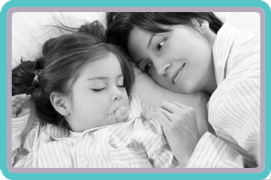
"Is your baby sleeping through the night yet?"
The truth is that most babies do not sleep through the night, yet it is a myth that is perpetuated from generation to generation.
Parents who are frustrated with frequent waking or who are sleep deprived may be tempted to try sleep training techniques that recommend letting a baby cry in an effort to "teach" him to "self-soothe". New research suggests that these techniques can have detrimental physiological effects on the baby by increasing the stress hormone cortisol in the brain, with potential long term effects to emotional regulation, sleep patterns and behavior. An infant is not neurologically or developmentally capable of calming or soothing himself to sleep in a way that is healthy. The part of the brain that helps with self-soothing isn't well developed until the child is two and a half to three years of age. Until that time, a child depends on his parents to help him calm down and learn to regulate his intense feelings.
The Case Against Solitary Sleep
It's important to note that infant solitary sleep is a relatively new practice that has evolved in the western world only within the last 100 years. Recently, there have been efforts by various medical and professional organizations to discourage parents from sleeping with their children for fear that it contributes to an increase in Sudden Infant Death Syndrome (SIDS). However, new research demonstrates that co-sleeping, when practiced by informed parents, can be safe and beneficial. In fact, many cultures where parents routinely sleep with their children report some of the lowest SIDS rates. In some of these cultures SIDS is non-existent.


